 English
 中文版
 西班牙语
 阿拉伯语
 俄语
 朝鲜语
 泰语
 越南语
 波斯语
 德语
 土耳其语
 日本語
 葡萄牙语





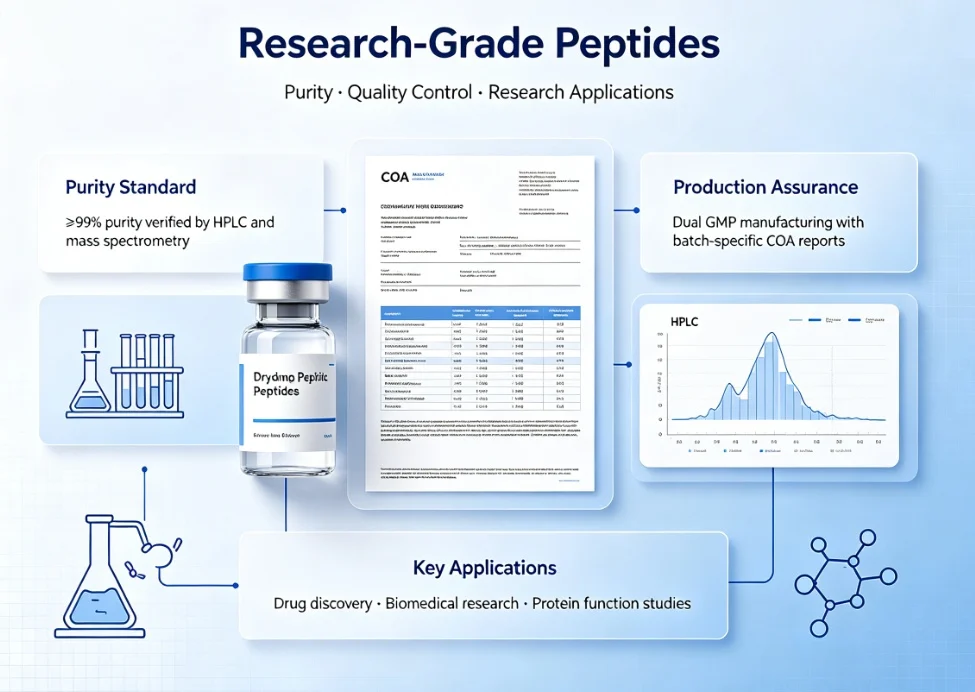
Research-grade peptides are materials produced and quality-controlled for laboratory and preclinical study rather than for direct consumer, food or clinical use. They are expected to meet defined purity and identity standards, with documentation such as a COA for each batch. Understanding what the grade means, how purity is measured and what quality checks apply helps researchers and procurement staff source material that fits their experimental needs.
What Is a Peptide
Peptides are compounds formed from amino acids linked by peptide bonds. They occur naturally in living organisms and participate in signaling, hormone regulation, immune response and other physiological processes. In research settings, synthesized peptides are used to study receptor pathways, protein function, drug candidates and diagnostic targets.
Grades and How They Differ
Peptide materials may be described under different grades depending on purity, control level and intended use. Research-grade material emphasizes purity verification, identity confirmation and batch documentation. Lower-control grades may be suited to less demanding screening or process work, while grades intended for regulated later-stage applications carry stricter environmental, traceability and documentation requirements. The exact definition can vary between suppliers, so the COA and test results matter more than the label alone.
Purity and How It Is Tested
Research-grade peptides commonly target purity above 99%, verified through HPLC (High Performance Liquid Chromatography) and mass spectrometry. HPLC separates the peptide from related impurities, while MS confirms molecular weight and identity. Purity figures are typically reported by area normalization, so it is useful to understand whether the reported percentage reflects the peptide itself after accounting for salt form, counterions and residual water.
Typical Quality Control Flow
- Raw material check: Amino acids and reagents are inspected before synthesis.
- Synthesis and purification: The chain is assembled and purified to reduce impurities.
- Identity and purity testing: HPLC and MS confirm purity and molecular weight.
- Lyophilization and packaging: The purified peptide is freeze-dried and sealed for storage.
- Batch documentation: A COA records test methods, results and batch number.
Common Research Applications
- Drug development: As candidate compounds or intermediates in early program work.
- Biomedical research: Studying receptor signaling, protein function and pathways.
- Diagnostic research: Supporting biomarker and assay development.
- Cosmetic ingredient research: Investigating skin-repair and anti-aging peptide pathways in laboratory settings.
What to Check When Sourcing
- Purity and the test method reported on the COA.
- Identity confirmation: CAS number, sequence and molecular weight match the product.
- Batch traceability and the availability of test records on request.
- Stated storage conditions, salt form and net content.
All peptides described on this site are supplied for laboratory research use only. They are not intended for human consumption, veterinary use, food production or cosmetic formulation for sale.